NUTN Welcomes Former Minister of Education Dr. Ching-ji Wu to Discuss AI and Sustainability in Future Education
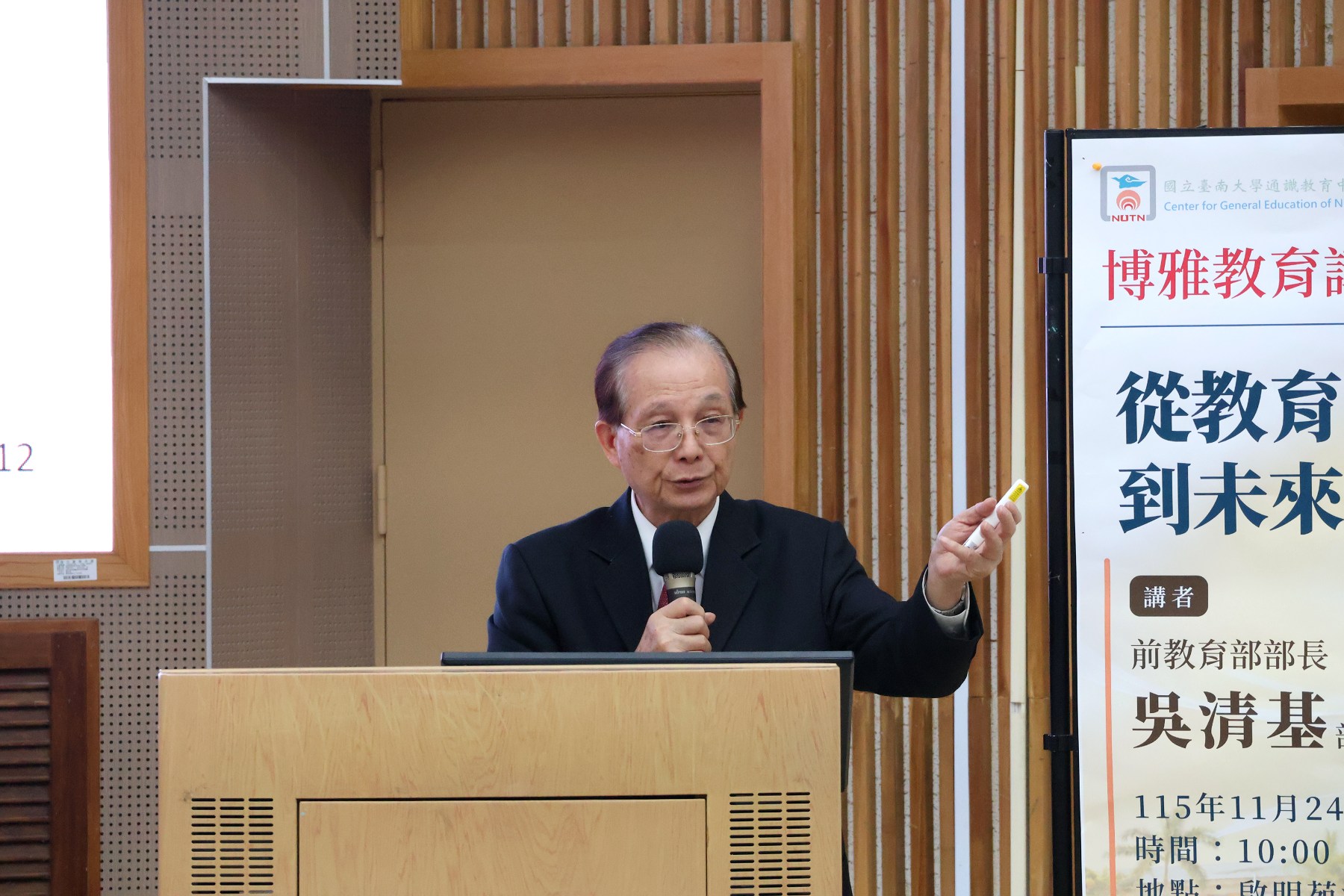
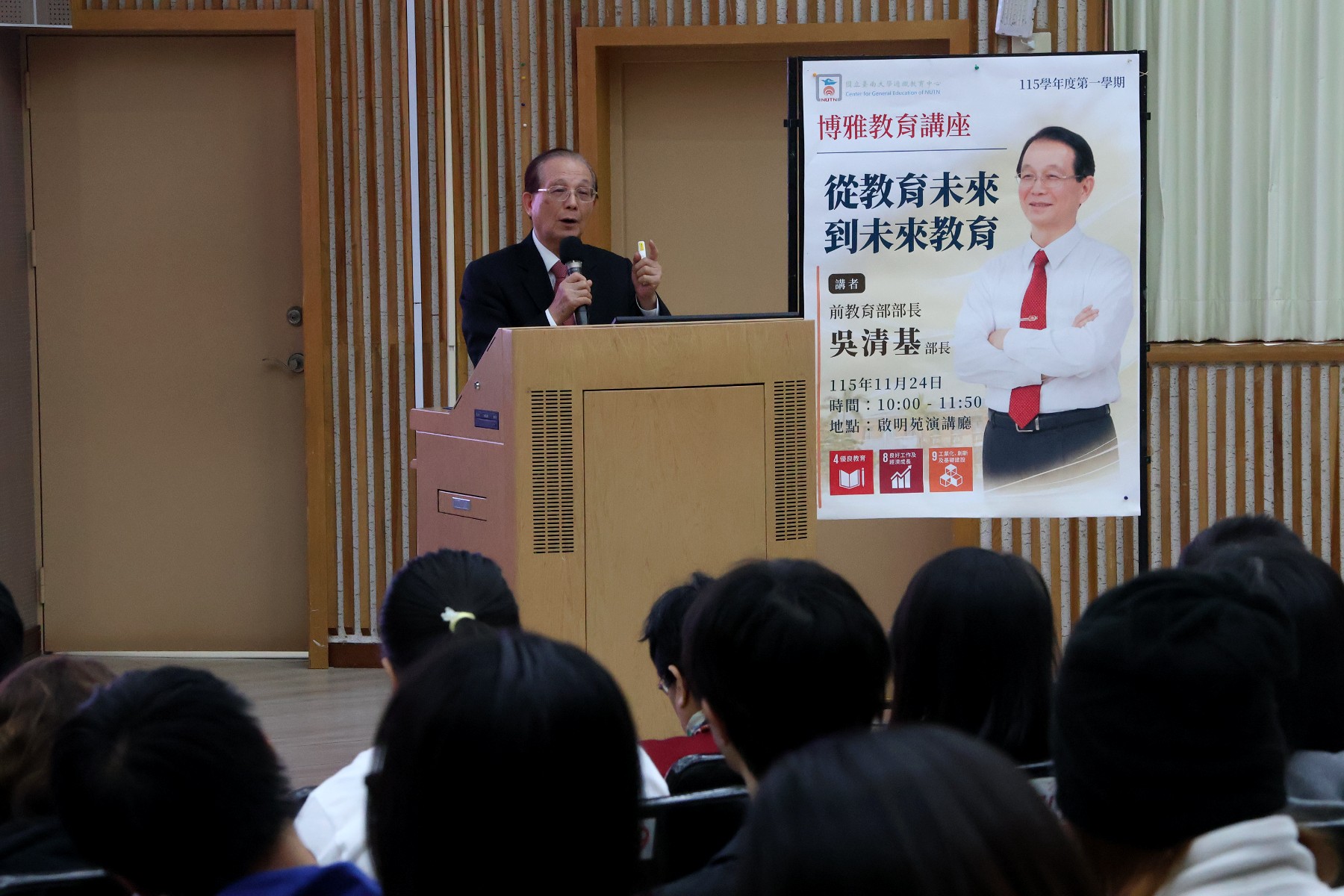
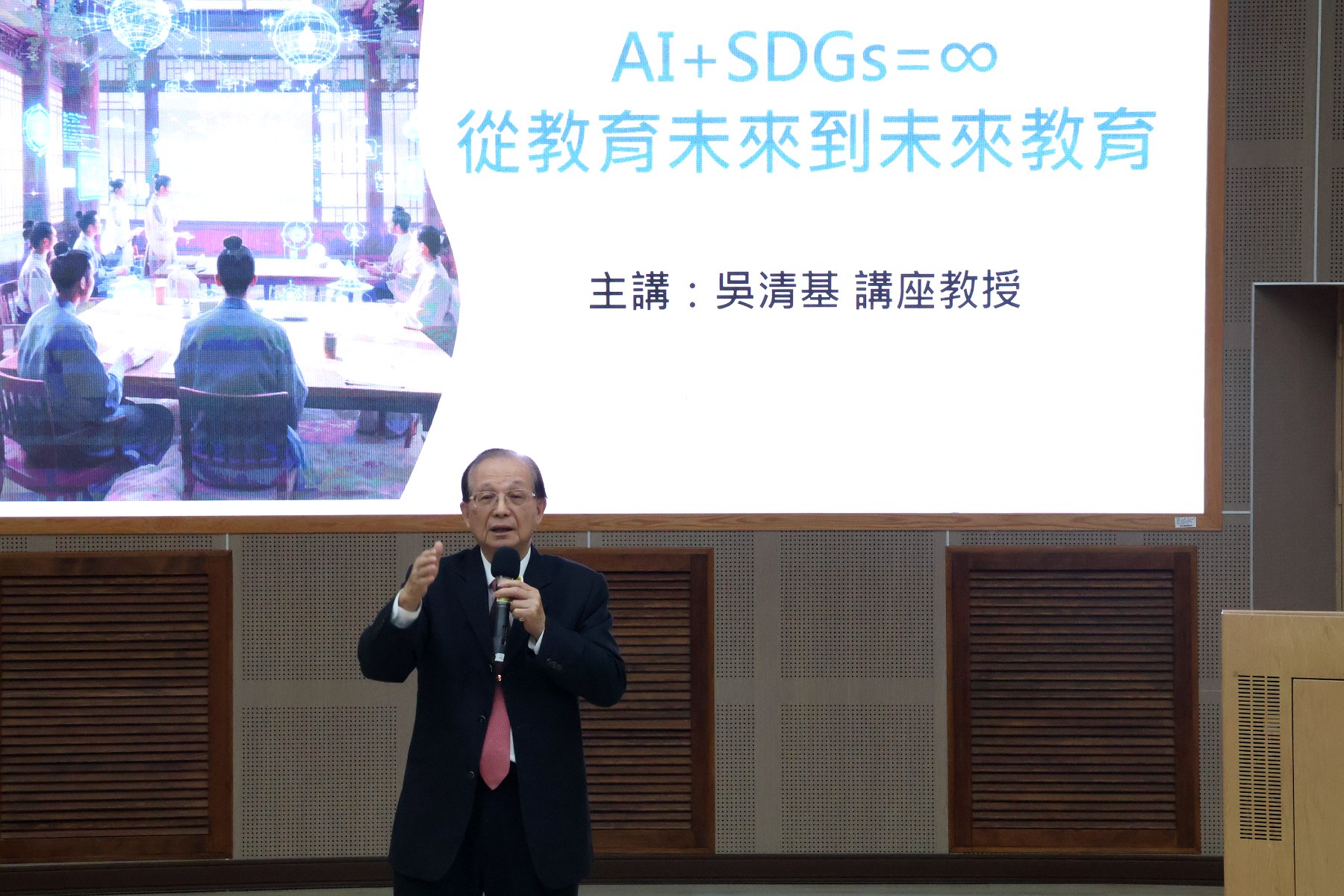
On the morning of November 24, 2026, the Center for General Education of NUTN hosted a distinguished Liberal Arts Lecture at the Chi-Ming Building Auditorium. The event featured former Minister of Education Dr. Ching-ji Wu, who delivered a keynote address titled "From the Future of Education to Future Education," exploring emerging trends in education through the lenses of artificial intelligence (AI), sustainable development, and higher education transformation.
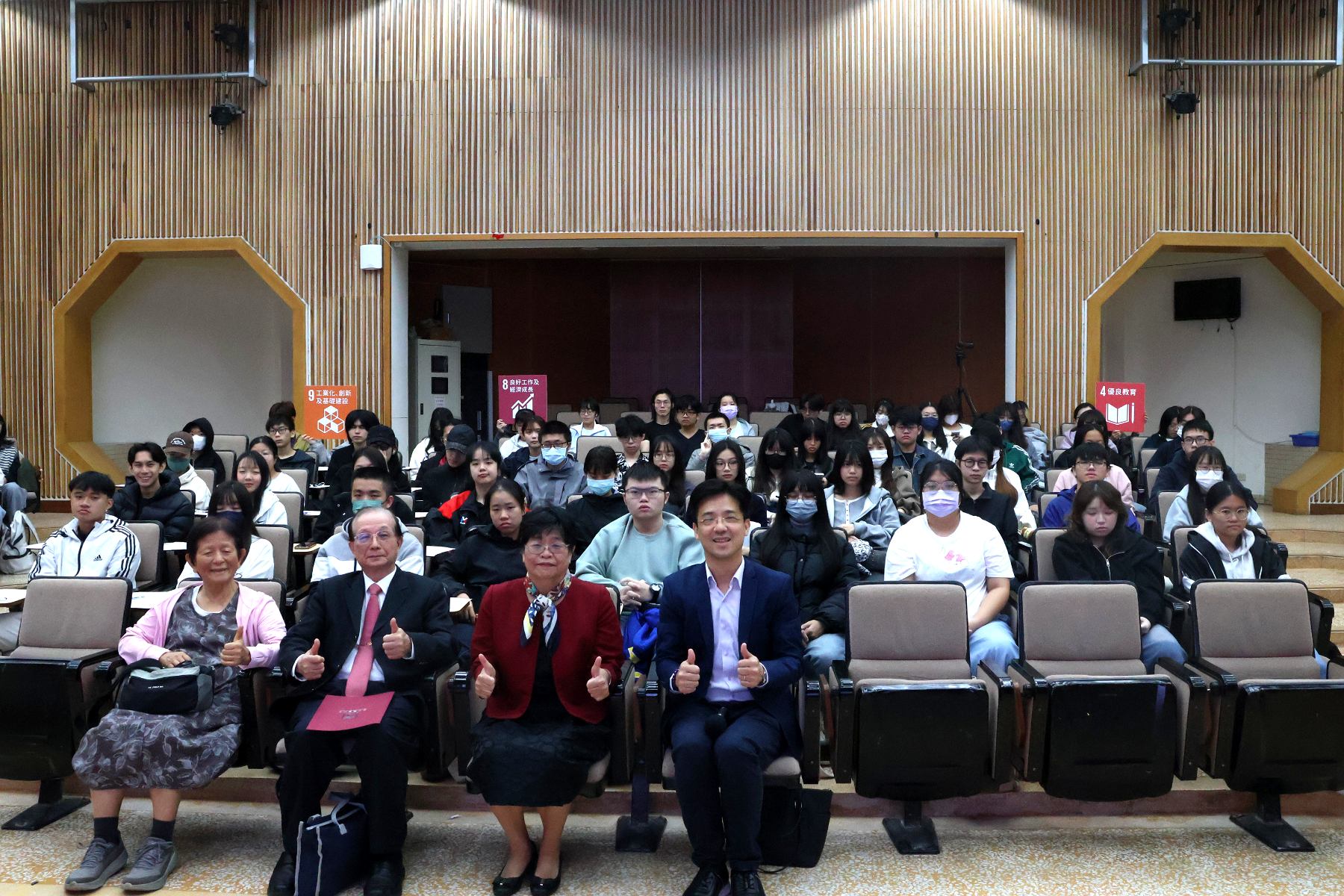
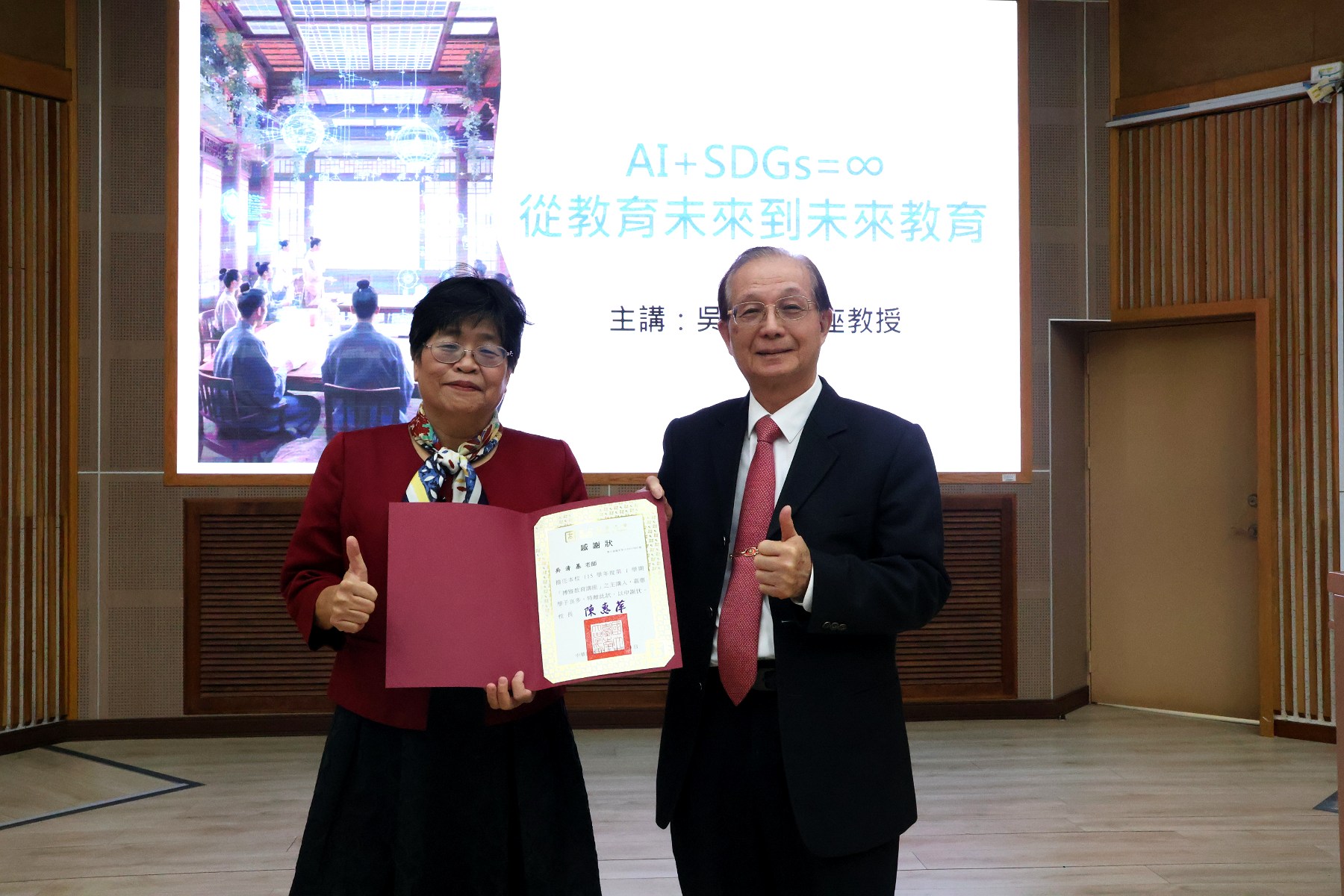
NUTN President Dr. Hui-ping Chen and Director of the Center for General Education Dr. Che-chuan Yeh attended the lecture. On behalf of the university, President Chen presented Dr. Wu with a commemorative gift and a certificate of appreciation, thanking him for returning to his alma mater to share his wealth of experience in educational administration and academic research, as well as for inspiring students to rethink the role of education amid rapid technological advancement and social change.
During his speech, Dr. Wu traced the societal evolution from the agricultural, industrial, and information eras to the digital society, illustrating how educational paradigms have progressively shifted from traditional apprenticeships and mass classroom instruction to digital platforms, smart campuses, and human-AI collaboration in the AI era. He pointed out that amid the rapid rise of generative AI and the United Nations Sustainable Development Goals (SDGs), education simultaneously faces challenges in technological transformation, sustainable development, and evolving models of talent cultivation—emphasizing that AI technology and sustainability concepts must be closely integrated.
Looking ahead to the vision of future education, Dr. Wu cited relevant educational frameworks from UNESCO and the Organisation for Economic Co-operation and Development (OECD). He stressed that technological advancement must go hand in hand with ethics, inclusivity, and sustainability values, ensuring that AI serves as a tool to enhance teaching, foster interdisciplinary collaboration, and address societal issues rather than merely pursuing technical progress for its own sake.
Regarding practical implementation in higher education, Dr. Wu outlined six key dimensions: future campus, teaching, learning, administration, service, and campus life. Drawing on university cases from Singapore, Finland, the United States, and the Netherlands, he illustrated development pathways such as smart campuses, interdisciplinary AI courses, immersive learning, and industry-government-academia-community collaboration. He also reminded universities that institutional transformation must balance the Triple Bottom Line of People, Planet, and Prosperity, maintaining a strong focus on student well-being and environmental responsibility while enhancing resource efficiency and innovation capacity.
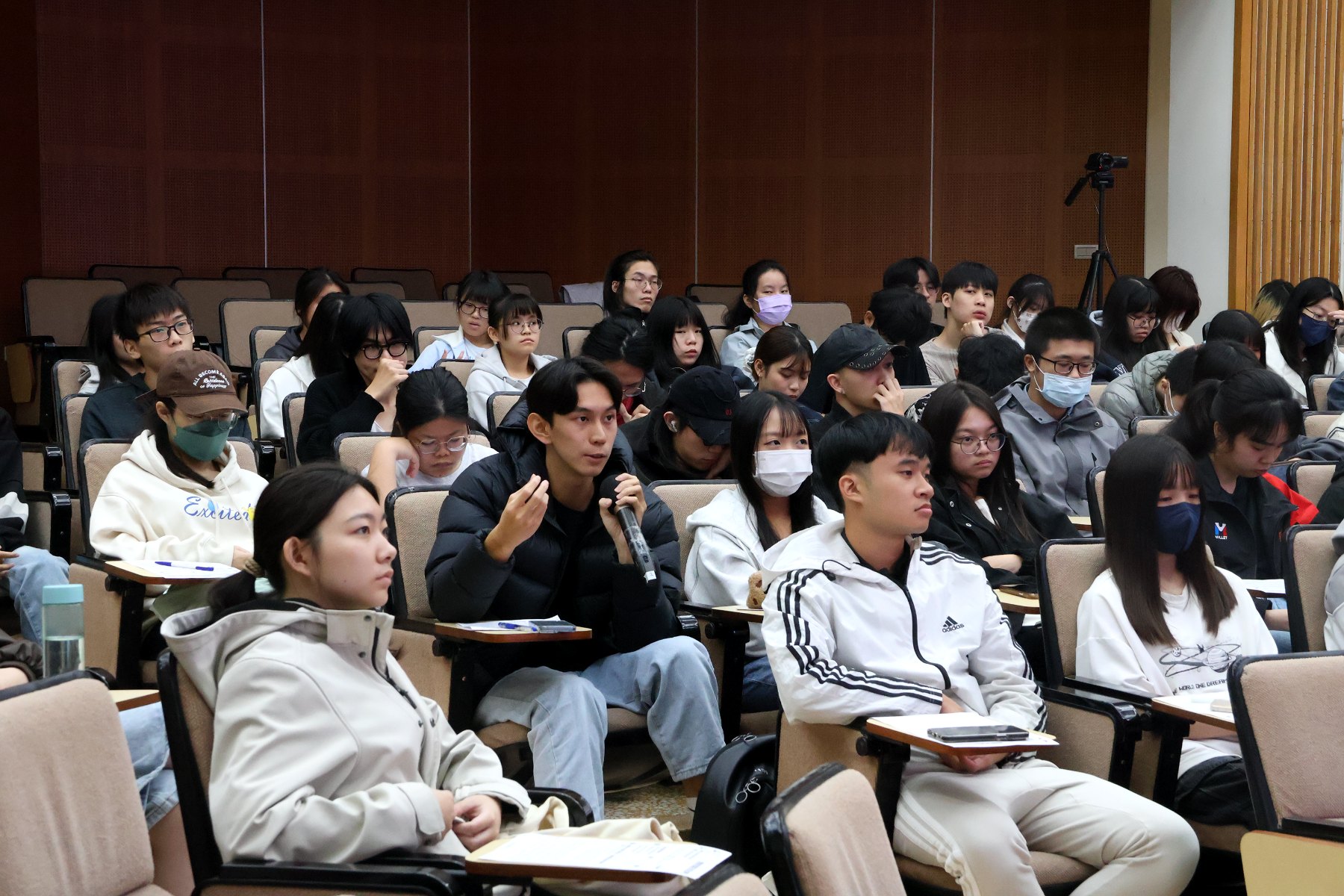
During the Q&A session, an NUTN student asked whether current education systems can move beyond evaluating students solely by academic grades. In response, Dr. Wu noted that alongside academic performance, attitude, a sense of responsibility, and altruism are equally vital. He encouraged students to cultivate a character willing to shoulder responsibilities and care for others while pursuing professional competence.
Concluding his address, Dr. Wu paid tribute to the visionary dedication of Tamkang University Founder Dr. Clement C. P. Chang and Chairperson Dr. Flora Chia-I Chang in advancing educational futures studies in Taiwan. He left faculty and students with a thought-provoking reflection: "The future of the past is built upon the future; the future of the present is built upon the past; and the future of the future is built upon the present." Through these words, he urged everyone to build their judgment, learning agility, and capacity for action in the here and now to navigate the rapidly evolving AI era.
National University of Tainan remains dedicated to guiding students to engage with key issues in technology, sustainability, and social development through its Liberal Arts Lecture series, fostering interdisciplinary thinking and humanistic literacy. Through general education and cross-disciplinary learning, NUTN aims to empower students not only to understand future trends, but also to uphold humanistic care and social responsibility amidst technological advancement—steadily building the resilience needed for future education and societal transformation.


相關照片